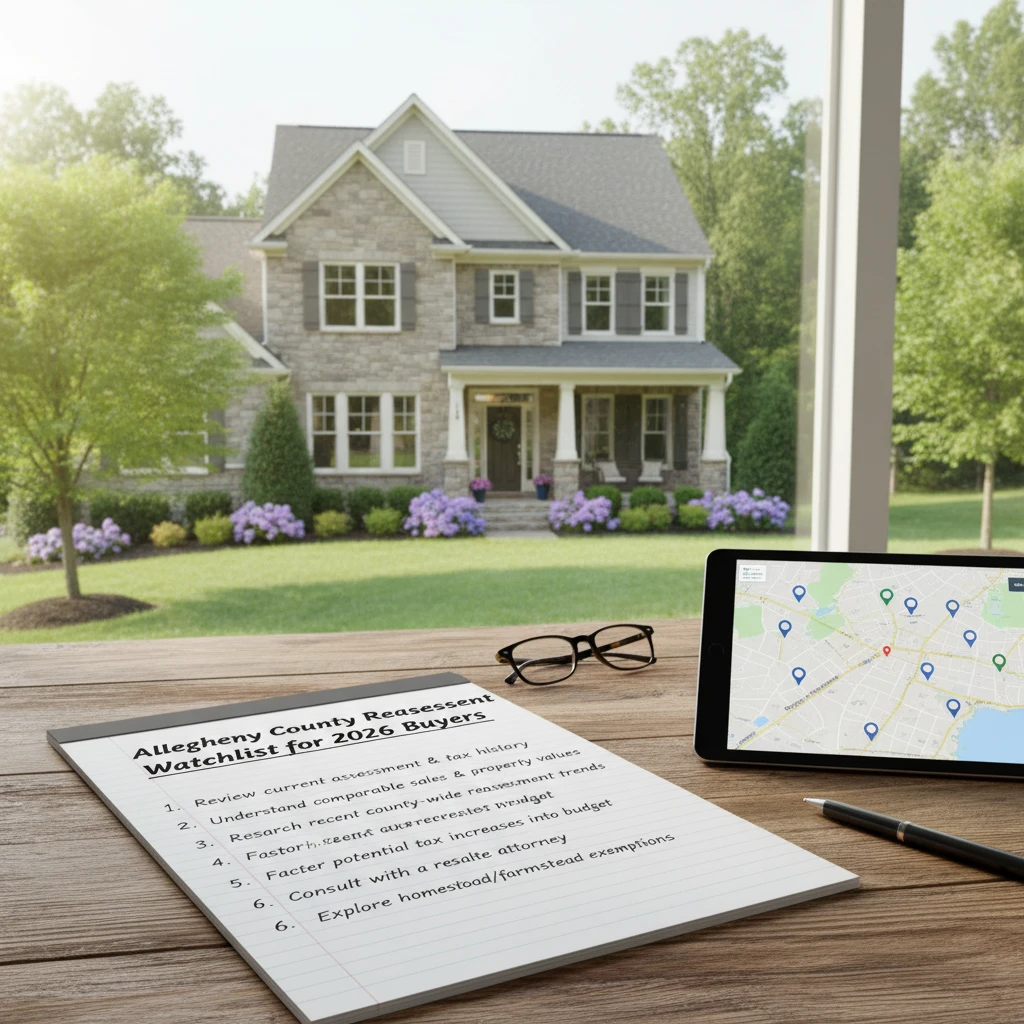
Allegheny County has not conducted a countywide reassessment since 2012. That 14-year gap has created a significant mismatch between assessed values and market values — and buyers purchasing above $500K in the North Allegheny and Pine-Richland corridors are the most exposed if a reassessment is ordered. Here's what I tell every buyer who asks about long-term ownership costs.
How Out of Date Is the Current Assessment System?
Allegheny County currently uses a Common Level Ratio (CLR) of approximately 54.5%. In plain language, that means assessed values are roughly 54.5% of actual market value. If you are buying a home for $700,000, the assessed value on record is likely around $350,000–$380,000. Your annual property tax is calculated against that assessed number, not the purchase price.
That gap has been widening every year since 2012 as home values in the North Hills have appreciated. The NA SD corridor has seen 4–6% annual appreciation over that period, meaning some homes that sold for $450K in 2012 now trade at $700K+ — but are still assessed at 2012 values. That's a significant underassessment that creates a political and legal pressure point.
What Would a Full Reassessment Mean for North Hills Buyers?
A full reassessment could effectively double annual property taxes for buyers in the $600K–$800K North Hills range. A home purchased today at $700K — currently assessed around $380K under the 54.5% CLR — could be reassessed to $650K–$700K, adding $5,000–$9,000 per year to the tax bill at current North Allegheny SD millage rates. That is a material ownership cost that belongs in every offer analysis.
This is the scenario I model for every client buying above $500K in Allegheny County. If a court order or county council decision triggers a reassessment, the goal of the process is to bring assessed values to market value (or close to it). Using current market data, a home you're buying today at $700K could see its assessed value rise from roughly $380K to $650K–$700K. At current millage rates in the NA SD corridor, that could effectively double the annual tax bill — an increase of $5,000–$9,000 per year depending on the specific municipality and school district.
That is not a small number. On a $700K purchase, a $7,000 annual tax increase changes the affordability math meaningfully. I am not predicting this will happen on any specific timeline, but buyers who are not aware of the risk are not making fully informed decisions.
Which Buyers Are Most Exposed to Reassessment Risk?
Buyers purchasing above $500K in the North Allegheny SD corridor face the highest potential exposure for two reasons: (1) NA SD homes have appreciated the most aggressively since 2012, creating the largest assessment-to-market gap; and (2) the combined millage rate in NA SD municipalities is among the highest in the county, so the dollar impact of a reassessment is amplified.
Pine-Richland SD corridor buyers are similarly exposed — PR homes have appreciated 5–7% annually, compounding the gap. Seneca Valley SD buyers in Cranberry and surrounding areas have somewhat less exposure because Butler County properties (Cranberry is split between counties) are on a different assessment schedule.
Buyers in the $350K–$500K range have some exposure but are less severely affected because the absolute dollar increase on a smaller tax base is more manageable. Explore the Franklin Park neighborhood guide and the Pine Township neighborhood guide for current tax rate details by municipality before finalizing your target area.
What Should You Watch for in 2026?
The primary indicators to monitor are Pittsburgh Post-Gazette and TribLive coverage of Allegheny County Council reassessment discussions, any court filings by taxpayer advocacy groups challenging the current CLR, and Pennsylvania Department of Revenue CLR certifications (these are updated annually and can trigger mandatory assessment adjustments). If you see coverage of a formal reassessment order, the implementation timeline is typically 2–3 years — giving current buyers some lead time.
The secondary indicator is political: Allegheny County Executive and County Council elections can shift the reassessment stance significantly. A change in county leadership toward fiscal reform could accelerate the timeline.
How Should Buyers Incorporate This Into Purchase Decisions?
My recommendation is to model two tax scenarios for every purchase above $500K: the current tax bill based on existing assessed value, and a projected bill based on full reassessment to purchase price. If both scenarios are comfortable within your monthly budget, you are protected. If the reassessed scenario pushes you to the edge of comfort, that is information you need before closing.
I also recommend buyers in the $700K+ range consult a local tax attorney or CPA about the formal appeal process. Reassessment decisions can be appealed if the new assessed value exceeds market value — and documenting your purchase price and appraisal creates the evidentiary record needed to support a successful appeal. Review current North Allegheny SD listings in Wexford to get a baseline for the current assessed values in your target communities.
Explore Reassessment Exposure Areas — Resources and Active Listings
| Resource | What You Get |
|---|---|
| Franklin Park Neighborhood Guide | Market data, school profile, and tax environment for this high-exposure NA SD community |
| Pine Township Neighborhood Guide | Community overview and assessed value context for the Pine-Richland SD corridor |
| Homes For Sale — Wexford / North Allegheny SD | Active listings with current tax data in the most reassessment-exposed corridor |
| Allegheny County Tax Guide | How the CLR, millage rates, and assessed values interact to set your annual tax bill |
| Cranberry Tax Basis Reset Playbook 2027 | Butler County reassessment comparison and what it means for cross-county buyers |
Execution Strategy for Active Buyers
Every buyer I work with above $500K in Allegheny County receives a two-scenario tax worksheet before they write an offer. That worksheet shows the current annual tax, the fully reassessed annual tax estimate, and the monthly delta. It takes 20 minutes to build and it has saved multiple clients from purchase decisions they would have regretted.
- Request the current assessed value and millage rate for any property before writing an offer.
- Model both current-assessment and full-reassessment tax scenarios into your monthly budget.
- For purchases above $700K, consult a local CPA about the tax appeal process and required documentation.
- Monitor Allegheny County Council activity and the annual CLR certification through 2026.
Related Next Reads
If you're weighing the tax exposure question against the investment case for the North Hills, the luxury market forecast for summer 2026 covers appreciation projections that inform the long-term ownership calculus. For families on a school-year timeline, our relocation guide covers how to sequence your search so reassessment risk is evaluated before you commit.